Between Two Posts
Some mornings the order goes like this. A dance video. Then an execution. Then an ad for headphones. Then a bombed building. Then somebody’s beach photo. Then a name — a real person, arrested, whose family is asking anyone who will listen for help.
The timeline doesn’t sort by weight. It just scrolls.
And somewhere in that same stream, I’m supposed to post a track. Something with a pulse. Something you can move to.
I won’t pretend that’s easy. There is a particular kind of vertigo in writing a bassline in the afternoon and reading the news at night — the pressure from inside the country, the pressure from outside, and the feeling that any sound you make is either too small or wildly out of place. Some days the honest reaction is to say nothing at all.
But I’ve been making music long enough to know what happens when I choose silence. Nothing transforms. The heaviness just sits there and gets heavier.
Creativity has always been the great lever. Not because it makes anything prettier or easier to look at, but because it’s one of the few forces that can take a dark, unmoving emotion and give it somewhere to go — without lying about where it came from. That’s true for me, in the room, alone with the machines. And it’s true for the people who eventually hear it: some of them living this directly, some of them a whole continent away, wondering why any of it should concern them.
It concerns them because it always did. War and peace are not two separate weather systems. Creation and destruction run on the same energy, pointed in opposite directions — the same intensity, the same conviction, the same capacity to change what a place looks like. One builds, one erases. We choose, constantly, and mostly without noticing.
Everything that flows through one narrow channel eventually reaches all of us. That’s not a metaphor I invented. It’s just how the world is wired now.
So I keep working. Not as an escape from the news, and not as a comment on it either. Something else: a way of holding the weight and still insisting on movement, on rhythm, on a body in a room deciding to dance anyway. That insistence is not a small thing. In certain places, it’s the whole argument.
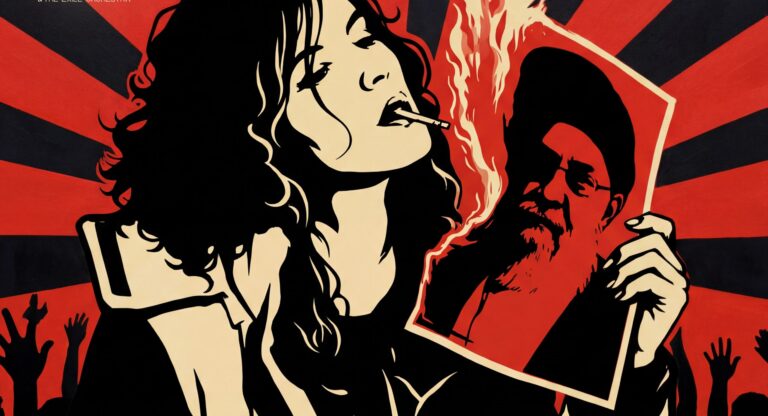
Project HORMUZ is also this — an attempt to be a voice for people who are being denied one. Through shutdowns, through censorship, through fear. I have no illusions about what a piece of music can do. But a sound can cross a border that a sentence cannot, and it can reach someone who was never going to read the article.
If it reaches you, then for a few minutes, they are not alone in this.